
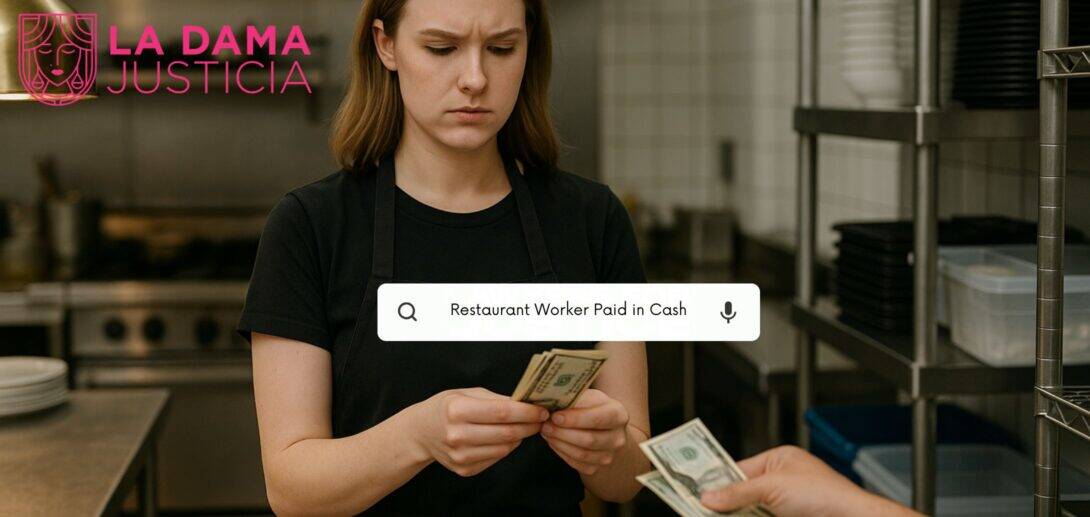
Many restaurant employees in California, such as servers, cooks, and dishwashers, are paid partially or entirely in cash. Although paying workers in cash is not automatically unlawful, it becomes a serious problem when employers fail to follow state and federal wage laws. Understanding employee rights in the restaurant industry is essential to ensuring fair pay and legal protection.
What the Law Says About Paying Employees in Cash
California labor law does allow employers to pay wages in cash as long as all required deductions are properly made and accurate wage statements are provided. Under California Labor Code § 212 and § 226, employers must:
- Provide an itemized pay stub showing total hours worked, gross and net wages, deductions, and pay period dates.
- Maintain accurate payroll records for at least three years.
- Withhold and report taxes (Social Security, Medicare, state, and federal).
If an employer pays in cash but fails to report the income or withhold taxes, they are violating both state labor laws and IRS regulations and can lead to fines, audits, and even criminal penalties.
Common Violations When Restaurant Workers Are Paid in Cash
Unfortunately, some restaurant owners misuse cash payments to cut corners. Some of the most common violations include:
- Failure to Pay Minimum Wage or Overtime
California’s minimum wage in 2025 was $16.50 per hour statewide, with some cities (like Los Angeles and San Francisco) requiring even higher rates. Paying in cash does not exempt an employer from minimum wage obligations. - Off-the-Books Employment
Some employers fail to record cash wages to avoid taxes. This “under-the-table” practice leaves employees without proof of income, making it difficult to claim unemployment benefits, workers’ compensation, or Social Security. - No Pay Stubs or Records
Workers paid in cash without written records cannot easily verify their pay, making it harder to prove wage theft or overtime violations. - Misclassification as Independent Contractors
Employers may mislabel employees as contractors to avoid payroll taxes. Under California’s AB 5 “ABC test,” most restaurant workers are employees, not contractors.
Why Proper Documentation Matters
Even if workers are being paid fairly, they should always receive documentation. Pay stubs and W-2 forms protect them by proving:
- Legal income for tax purposes
- Eligibility for loans, leases, or benefits
- The total hours and wages in case of a dispute
If the employer refuses to issue pay stubs or insists on off-the-books cash payments, it may be a red flag for wage theft or tax evasion.
Signs Your Restaurant Employer Is Violating Wage Laws
Many restaurant workers are not always sure when cash payments cross into wage theft. Some of the most common warning signs include not receiving pay stubs or written records, having hours on paper that do not match the hours actually worked, or being told to clock out and continue working.
Another red flag is being paid a flat amount per shift, which often results in unpaid overtime or wages that fall below the legal minimum. Employees should also be cautious when an employer pays only in cash and refuses to report income, or when workers are labeled as independent contractors even though their job duties show they should be classified as employees under California’s ABC test.
If any warning flags are present, it may be a sign that the employer is not following California wage laws, and employees may want to consult with an employment attorney to understand their options.
What To Do If Workers Are Paid Illegally in Cash
If restaurant workers suspect that their employer is violating labor laws, they have several options to protect their rights. As California law protects employees from retaliation for reporting wage violations, it means employers cannot legally fire, demote, or punish workers for asserting their rights.
For instance, restaurant workers can file a wage claim with the California Labor Commissioner’s Office (DLSE) or report tax fraud to the IRS or the California Franchise Tax Board. In addition, restaurant workers can consult with an employment lawyer to recover unpaid wages, penalties, and damages.
Lawyers for Justice, P.C. is Here to Protect Restaurant Worker’s Rights
Being paid in cash is not unlawful, but it must be done the right way. Every worker in California deserves transparent pay, proper tax reporting, and the full protection of state and federal labor laws.
If restaurant workers believe that their employer is paying them under the table or withholding wages, they should contact Lawyers for Justice, P.C. today to reclaim their rights and recover what they are rightfully owed.
Call 818-JUSTICE or fill out our online contact form today for a free, confidential consultation.
Frequently Asked Questions About Cash Wages in California
Is it legal for restaurant employers in California to pay employees in cash?
Yes. Employers may pay wages in cash, but they must provide accurate wage statements, report all taxes, and follow minimum wage and overtime laws. Cash payments do not exempt employers from any legal obligations.
How can restaurant employees tell if cash wages violate California labor laws?
Cash wages may be unlawful if employees do not receive pay stubs, if hours are misreported, if overtime is unpaid, or if the employer fails to withhold taxes. Off-the-books cash payments are a common sign of wage theft.
What should employees do if they are being paid under the table?
Employees can file a wage claim with the California Labor Commissioner or consult an employment lawyer. California law prohibits retaliation for reporting wage violations.
Can restaurant employees still recover unpaid wages if they were paid in cash?
Yes. Employees may recover unpaid minimum wages, overtime, interest, and penalties even without formal records. Testimony, schedules, text messages, and witness statements can all support a claim.
Does being paid in cash affect eligibility for unemployment or workers’ compensation benefits?
It can. If an employer fails to report wages, eligibility for benefits may be impacted. Employees may still pursue claims, but lack of documentation often strengthens the need for legal representation.